 English
 Mandarin
 French
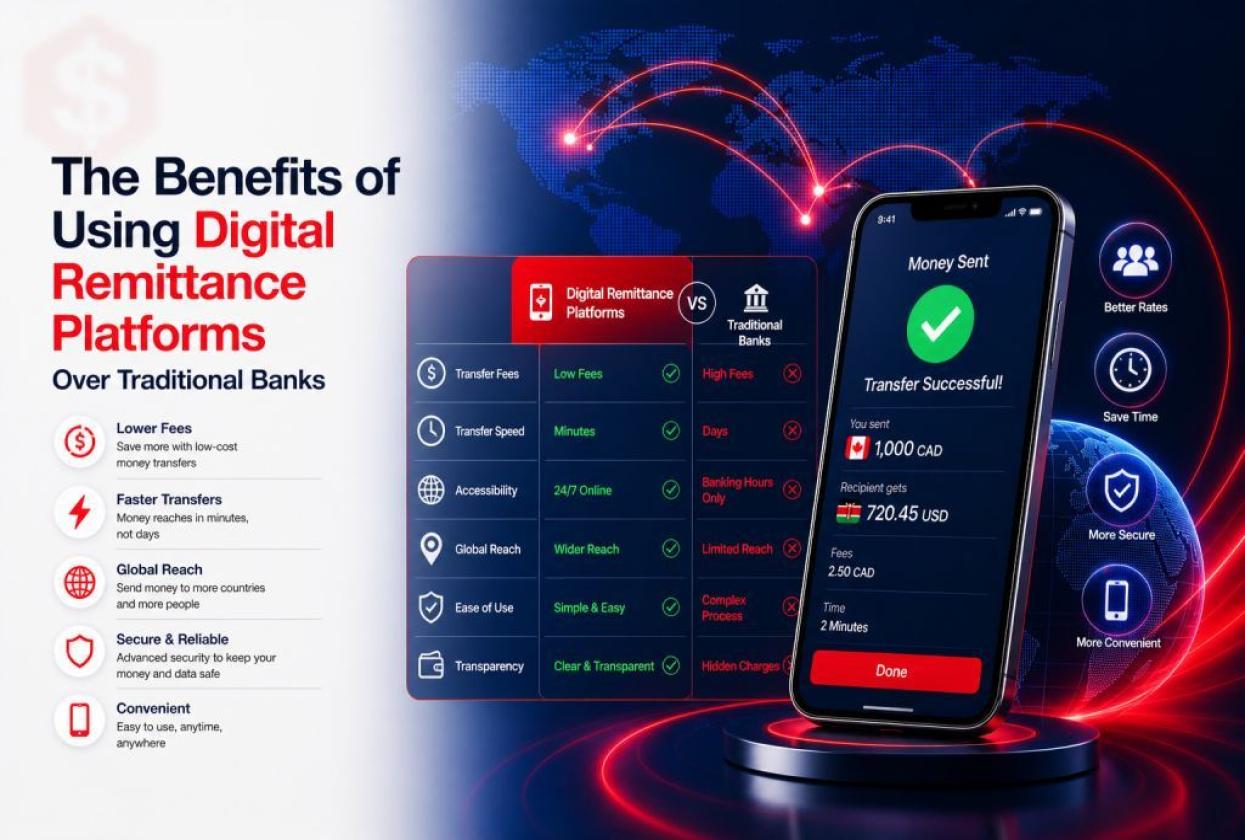
In 2026, the way people send money internationally has changed dramatically. While traditional banks still offer international transfers, more users are switching to digital remittance platforms because they are faster, cheaper, and more convenient.
If you regularly send money abroad, understanding the difference between banks and modern online money transfer services can help you save both time and money.
What Are Digital Remittance Platforms?
Digital remittance platforms are online money transfer services that allow users to send and receive money internationally using mobile apps or websites.
Unlike traditional banks, these platforms are built specifically for cross-border payments, offering:
Faster transfers
Lower fees
Better exchange rates
Mobile-friendly services
Examples include fintech-based solutions like AirMoney.
1. Lower Transfer Fees
One of the biggest advantages of digital money transfer services is cost.
Traditional banks often charge:
High flat fees per transaction
Additional intermediary bank charges
Hidden processing fees
In contrast, online remittance platforms usually offer lower and more transparent pricing, making them a more affordable money transfer option.
2. Better Exchange Rates
Banks typically add a markup to exchange rates, which reduces the amount your recipient receives.
Digital platforms are more competitive and often provide:
Near mid-market exchange rates
Lower conversion margins
Real-time rate transparency
This means you get more value when you send money internationally.
3. Faster International Transfers
Speed is another major difference.
With traditional banks, international bank transfers can take:
2–5 business days or more
With digital remittance platforms, transfers can be:
Instant or same-day
Processed in minutes in many cases
This is especially important for urgent payments and family support.
4. 24/7 Accessibility
Banks operate within business hours, but online money transfer platforms are available 24/7.
You can:
Send money anytime, anywhere
Track transfers in real time
Manage transactions from your phone
This flexibility makes digital platforms more convenient for global users.
5. Easier to Use
Traditional bank transfers often require:
In-person visits
Complex paperwork
Long processing steps
Digital platforms simplify everything into a few steps:
Sign in
Enter recipient details
Confirm and send
This simplicity makes online remittance services more user-friendly.
6. Mobile Wallet Integration
Modern digital remittance platforms support transfers to:
Bank accounts
Mobile wallets
Cash pickup locations (in some regions)
This flexibility allows recipients to access money in the way that suits them best.
7. Real-Time Tracking and Transparency
Unlike banks, many online money transfer services offer real-time tracking.
You can:
See exactly when money is sent
Track delivery status
Receive instant confirmations
Platforms like AirMoney provide transparent tracking so users stay informed throughout the process.
8. Improved Security and Compliance
Modern digital platforms use advanced security systems such as:
Encryption
Two-factor authentication (2FA)
Fraud monitoring systems
KYC verification processes
These ensure safe and compliant international money transfers, often exceeding traditional banking security in user experience.
9. Designed for Global Transfers
Banks are general financial institutions, but digital remittance platforms are built specifically for cross-border payments.
This means they are optimized for:
High-volume international transfers
Multiple currencies
Global payout networks
As a result, they are more efficient for sending money abroad regularly.
When Banks Might Still Be Used
While digital platforms are more efficient, banks may still be used for:
Large corporate transactions
Complex financial services
Regulatory-specific transfers
However, for everyday users sending money to family or friends, digital money transfer services are usually the better choice.
Final Thoughts
The shift from traditional banks to digital remittance platforms is driven by speed, cost savings, and convenience. In 2026, most people prefer online money transfer services because they offer a faster and more transparent way to send money internationally.
Platforms like AirMoney make global transfers simple, secure, and affordable—helping users move money across borders without the delays and high fees of traditional banking.
If you regularly send money abroad, switching to a digital platform could significantly improve both your experience and your savings.
AirMoney
Ready to send money globally?
Start a secure international transfer with confidence.