 English
 Mandarin
 French
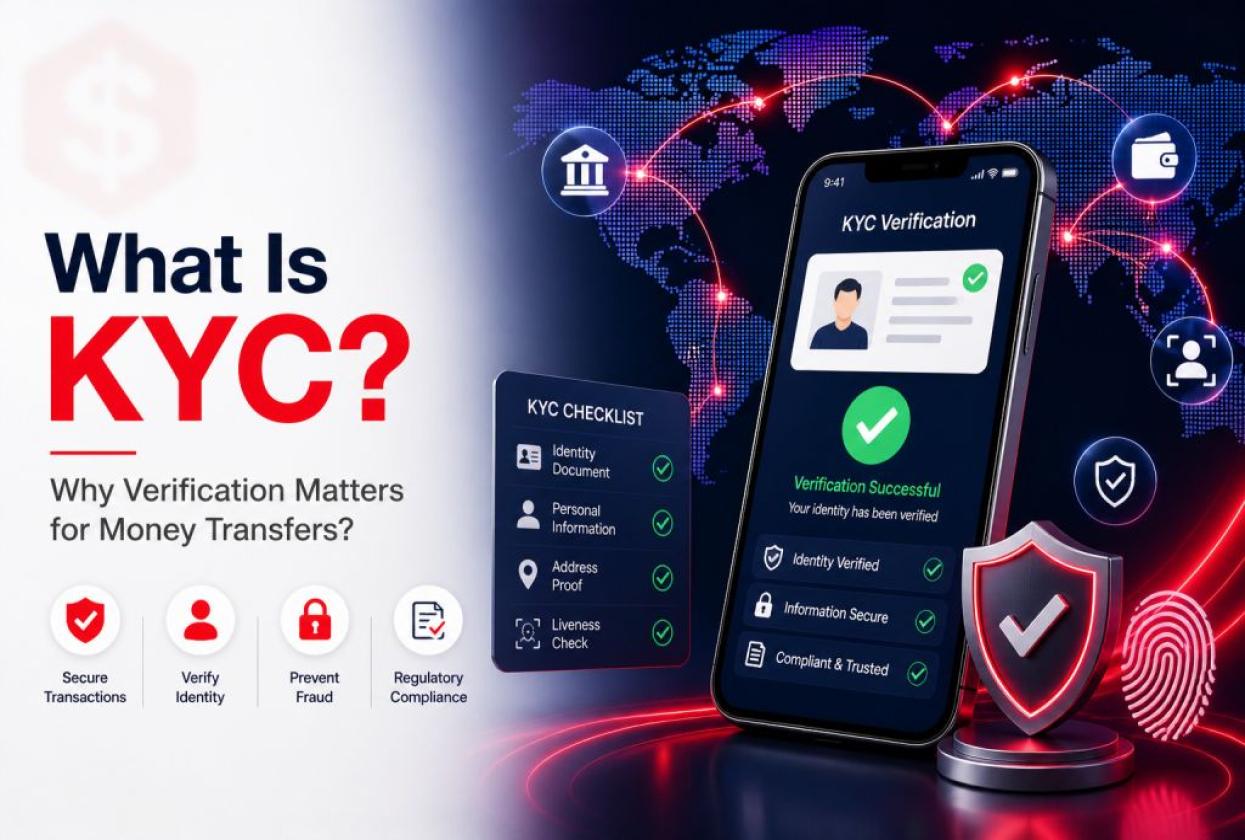
If you’ve ever tried to send money internationally through a bank or an online app, you’ve likely been asked to complete a verification step. This process is called KYC (Know Your Customer), and it is a standard requirement for almost all international money transfer services in 2026.
But why is it necessary, and how does it protect you?
What Is KYC?
KYC (Know Your Customer) is a verification process used by financial institutions and online money transfer platforms to confirm the identity of their users.
In simple terms, KYC ensures that you are who you say you are before you are allowed to:
Send money abroad
Receive international transfers
Access financial services
This process is a key part of global financial security systems.
What Information Is Required for KYC?
When signing up for a money transfer service, you may be asked to provide:
Full name and date of birth
Government-issued ID (passport, national ID, or driver’s license)
Proof of address (utility bill or bank statement)
Selfie or biometric verification (in some cases)
These details help verify your identity and prevent fraudulent activity.
Why Is KYC Required for Money Transfers?
KYC is not just a formality—it is a legal and security requirement for all regulated international remittance services.
Here’s why it matters:
1. Prevents Fraud and Identity Theft
KYC helps stop criminals from using fake identities to send or receive money.
By verifying users, online remittance platforms reduce the risk of fraud and unauthorized transactions.
2. Complies with Global Regulations
Financial services must follow strict laws such as:
Anti-Money Laundering (AML) regulations
Counter-Terrorism Financing (CTF) rules
These laws require platforms like AirMoney to verify users before allowing cross-border payments.
3. Protects Your Money and Account
KYC ensures that only you can access your account and send funds.
This protects your international money transfer account from:
Unauthorized access
Account takeover attempts
Fraudulent transactions
4. Builds Trust in the Financial System
When users are verified, it creates a safer and more transparent global payment system.
This trust allows millions of people to confidently send money abroad online every day.
What Happens If You Don’t Complete KYC?
If you skip or fail KYC verification, most platforms will:
Limit your transaction amount
Restrict sending or receiving money
Block access to full account features
This is because unverified accounts pose higher risks for fraud and illegal activity.
Is KYC Safe?
Yes. Reputable money transfer services use strong encryption and security systems to protect your data.
Platforms like AirMoney store your information securely and only use it for verification and compliance purposes.
Always ensure you are using a legitimate and regulated service before submitting your documents.
How Long Does KYC Take?
The verification process is usually quick in 2026:
Basic verification: a few minutes
Full verification: up to 24 hours (in some cases)
Many modern online money transfer platforms now use AI-powered verification to speed up the process.
Tips for a Smooth KYC Process
To avoid delays when signing up for a global remittance service, make sure:
Your ID is clear and not expired
Your personal details match your documents
You upload high-quality images
Your address proof is recent
Final Thoughts
KYC is a crucial part of modern international money transfers. While it may feel like an extra step, it plays a major role in keeping your money, identity, and transactions safe.
By completing verification on trusted platforms like AirMoney, you help create a more secure and reliable global financial system.
In 2026, KYC is not just about compliance—it’s about protecting you every time you send money abroad.
AirMoney
Ready to send money globally?
Start a secure international transfer with confidence.